Pan-India Films, Explained: How South Cinema Conquered the Hindi Belt
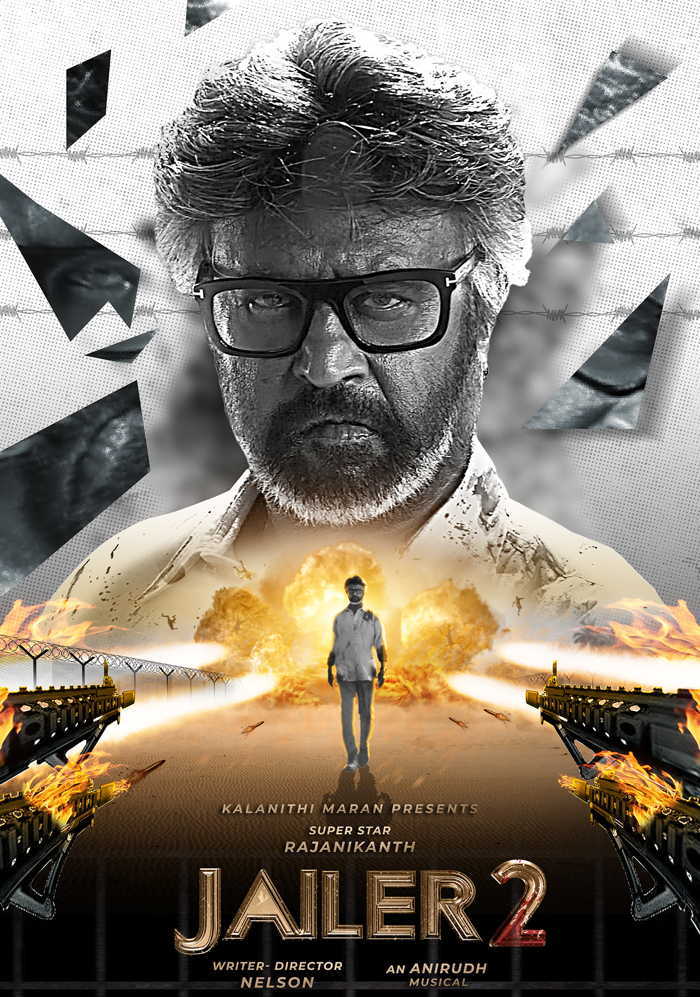
Some box-office milestones are about money. This one is about language. When Rajinikanth’s Jailer 2 opened this month, exhibitors in North India scheduled midnight shows for it — in its original Tamil version. No dub, no apology, no assumption that a Hindi-belt audience needs to be met halfway. The shows filled anyway, on the way to ₹424 crore-plus worldwide in four days (trade estimates) and the title of 2026’s biggest Tamil grosser. A generation ago, a Tamil film playing in Delhi or Lucknow at midnight, in Tamil, would have been unthinkable. Today it is a marketing flex. How did we get here?
The honest answer is that the conquest took thirty years, and for most of them, nobody in Mumbai was paying attention.
Wave One: The Satellite Years
Long before “pan-India” became an industry buzzword, Hindi audiences were quietly being trained to love South cinema — on television. Through the 1990s and 2000s, dubbed versions of Tamil and Telugu action films became staples of satellite movie channels, filling afternoon and weekend slots across the Hindi heartland. Mani Ratnam’s Roja and Bombay had already shown in the early 90s that a Tamil story, dubbed well, could move the whole country. The TV era industrialised that lesson: stars like Allu Arjun, Ram Charan and Mahesh Babu became familiar faces in UP and Bihar homes without a single Hindi theatrical release to their names.
Bollywood, ironically, kept confirming the appeal. A striking share of its biggest commercial bets in those years were remakes of South hits — Ghajini, Wanted, Rowdy Rathore and many more. Mumbai was effectively telling its own audience: these stories work. It just assumed the stories needed a Hindi star’s face to sell. The audience, watching the originals on TV for free, was under no such illusion.
Wave Two: The Baahubali Moment
What television built as familiarity, S. S. Rajamouli converted into box-office fact. Baahubali: The Beginning earned roughly ₹119 crore nett in Hindi in 2015 (trade estimates) — a proof of concept. Then Baahubali 2: The Conclusion detonated every assumption in 2017: its Hindi version collected around ₹511 crore nett (trade estimates), out-grossing every Hindi original released that year and standing as the biggest grosser the Hindi market had ever seen. A Telugu film, fronted by an actor most of the North knew mainly from satellite TV, had beaten Bollywood at its own game, on its own turf.

Two things mattered as much as the numbers. First, Baahubali 2 was never sold as a “dubbed film” — that faintly apologetic category Hindi marketing used to hide behind. It was sold as an event, released simultaneously across languages, powered by a cliffhanger (“Why did Kattappa kill Baahubali?”) that had become a genuinely national conversation. Second, Rajinikanth’s 2.0 followed in 2018 with roughly ₹190 crore nett in Hindi (trade estimates), showing the door Baahubali opened wasn’t a one-film accident. Scale plus a familiar star could travel. The industry had the data. What it didn’t yet have was the habit — that took a pandemic.
Wave Three: Streaming Erases the Last Barrier
The post-2020 era finished the job. Locked-down Hindi audiences, browsing streaming platforms with subtitles switched on as a matter of routine, discovered South originals in bulk — not as dubbed curiosities but as first-choice viewing. Pushpa: The Rise was the theatrical proof: a word-of-mouth phenomenon whose Hindi version crossed ₹100 crore nett (trade estimates) despite the era’s constrained releases. Then 2022 delivered the one-two punch of RRR and KGF Chapter 2, both crossing ₹1,200 crore worldwide (trade estimates), with KGF 2‘s Hindi version alone netting around ₹435 crore (trade estimates).

The endpoint of the trend arrived in 2024 with Pushpa 2: The Rule. Its Hindi version earned approximately ₹836 crore nett against roughly ₹343 crore for the original Telugu version (trade estimates) — the dub didn’t just complement the original, it earned nearly two and a half times as much. The tail was now wagging the dog. For a Telugu production, the Hindi belt had become the single biggest revenue pool.
| Film | Year | Hindi nett |
|---|---|---|
| Baahubali: The Beginning | 2015 | ₹119 crore |
| Baahubali 2: The Conclusion | 2017 | ₹511 crore |
| 2.0 | 2018 | ₹190 crore |
| Pushpa: The Rise | 2021 | ₹100 crore+ |
| KGF Chapter 2 | 2022 | ₹435 crore |
| Pushpa 2: The Rule | 2024 | ₹836 crore |
All figures are India nett collections of the Hindi versions and are trade estimates, not audited producer figures. For scale: Pushpa 2’s Hindi nett of ~₹836 crore was nearly two and a half times its Telugu original’s ~₹343 crore nett, and both RRR and KGF Chapter 2 crossed ₹1,200 crore worldwide.
The Mechanics: Why These Films Travel
Look at the crossover hits and a pattern emerges. What travels is spectacle: action, mythology, revenge sagas and mass-hero dramas lean on image, scale and emotion rather than dialogue nuance. What rarely travels is wordplay-heavy comedy, which dies in translation. The winners also invested in the unglamorous craft of crossing over — professional Hindi dubbing with well-cast voices, songs re-recorded rather than subtitled, and full-scale Hindi marketing campaigns instead of token releases. Underneath it all sat that decade of satellite premieres, which meant the stars arrived pre-sold. And crucially, South mass cinema had never stopped serving the single-screen, front-bench audience that Hindi cinema largely abandoned during its multiplex-and-metro phase. When that audience looked for heroes, the supply was coming from Hyderabad, Bengaluru and Chennai.
What Bollywood Got Wrong
Hindi cinema’s problem in the same years was partly creative and partly arithmetic. The remake pipeline became a trap: why would audiences pay theatre prices for a scene-by-scene copy of a film they had already watched free on TV or streaming? Remake fatigue set in precisely because the originals were now one click away. At the same time, star economics distorted budgets — with top Hindi stars commanding enormous fees, too little of many productions’ budgets remained for the scale, craft and VFX that audiences could now compare against Baahubali, KGF and RRR on the same screen. Bollywood spent those years optimising for a narrower, urban, multiplex viewer, while the definition of a “big film” was being rewritten by industries that had never narrowed their ambition. The encouraging sign is that the correction has begun — the biggest recent Hindi hits have leaned back into scale and mass emotion — but the hierarchy has permanently changed.
What “Pan-India” Means Now
Today the term no longer means “a regional film that also dubbed well.” It describes films designed from the script stage for every major market at once: simultaneous multi-language releases, casting that deliberately spans industries, and marketing planned nationally rather than state by state. The upcoming slate reads like the strategy’s manifesto. Prabhas fronts Sandeep Reddy Vanga’s Spirit, deliberately moved to a Diwali 2027 clash with Ramayana Part 2. Mahesh Babu headlines Rajamouli’s Varanasi, due April 7, 2027. Jr NTR teams with Prashanth Neel for Dragon, expected in June 2027. And the traffic runs both ways now: Drishyam 3, a Hindi franchise built on a Malayalam original, has neared ₹550 crore worldwide (trade estimates), while a Tamil director delivered one of Hindi cinema’s biggest-ever hits with Jawan. Jailer 2‘s Tamil midnight shows in the North are simply the logical endpoint: the star and the event are the product; language has become a detail.
The Risks
Success this visible breeds imitation, and imitation breeds formula. The pan-India template — the slow-motion hero introduction, the interval block engineered as a mini-climax, the sequel hook — is already at risk of fatigue, and for every KGF there are expensive pan-India attempts that sank quietly because scale was copied but storytelling wasn’t. Budgets are the other danger: when every big film is financed on the assumption of all-India recovery, two or three failures in the same season can shake the whole model. There is also a subtler creative cost — regional specificity sanded down to offend no market can produce films that belong everywhere and nowhere.
The Verdict
The Hindi belt was not conquered in a single battle. It was won by accumulation: television made the stars familiar, Baahubali made the phenomenon undeniable, streaming made it habitual, and Pushpa 2 made the Hindi audience the main prize. “Pan-India” is no longer a genre or a gamble — it is increasingly just what a big Indian film is. The question for the coming decade is not whether South cinema will play in the North. It is whether any ambitious film, from any industry, can afford not to be built for all of India at once.
Sources: Filmverse; Bollywood Hungama; Koimoi; Pinkvilla; Sacnilk trade figures.